







Signs That Your Baby Is Ready to Sleep
3 min read От Мама За Мами
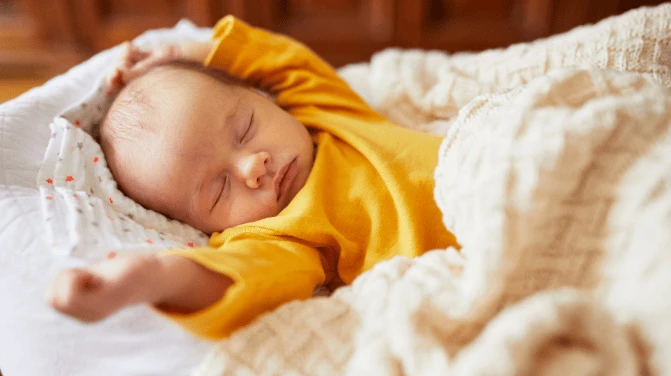
The stretch of time from the moment your baby wakes from their last nap until they next fall asleep is known as the wake window. These windows vary depending on your baby's age, but alongside the average figures accepted for a given age, we also need to factor in each child's individual traits.
The circadian (biological) rhythm is natural in every newborn, and it's worth knowing that it can be trained and adjusted over time. Your baby's cyclical behaviour is the key to easier parenting, and it's a huge help to us as parents. Consistently repeating feeds at set times (with some natural variation, of course), active and quiet play, and bedtime rituals all bring about a smooth routine. It's shaped around your baby's needs, and it lets us organise our own time as well as possible.
When it comes to wake windows and knowing when it's time for a lullaby and sleep, it's essential to read the signs that your baby is getting sleepy correctly. We all know that a yawning baby is a sleepy baby, but the truth is that yawning is actually one of the last signs of tiredness. The early signs of sleepiness often go unnoticed by us as parents. Caught up in an activity, a game or another ritual, and without keeping an eye on the clock for the approaching bedtime window, it's easy to miss the key early signs of tiredness before the yawning kicks in as the final signal of wanting to sleep.
◉ sudden irritability
◉ a fixed, staring gaze
◉ rubbing the nose and eyes, reddened eyebrows
◉ a frozen, blank expression on your baby's face
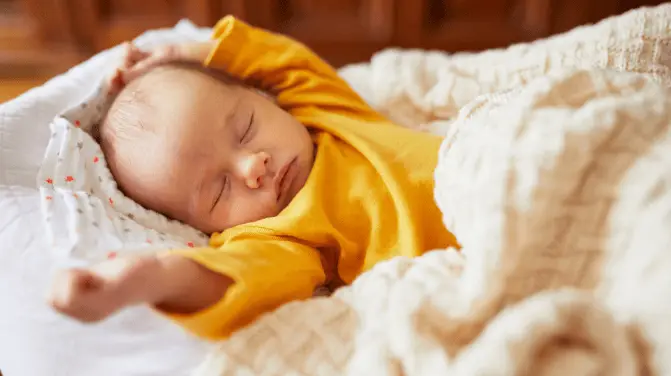
It's best to start the bedtime ritual as soon as the first signs of tiredness and sleepiness appear. A sudden loss of interest in an activity your baby was enjoying just minutes earlier, paired with a blank, distant stare, is one of the first possible signs that a good moment for sleep is approaching. A cheerful game can inexplicably turn into irritability, whining and fussing, which shortly after may lead to slight pinkness or redness around the eyebrows. If these stages slip past our attention, your baby will typically start to protest more insistently, wriggle abruptly, and rub their nose and eyes. Yawning tends to be the final stage for most babies.
Keeping track of the time is a great help: watch the time since your baby last woke up, and estimate the next likely sleep time based on the average wake windows for their age. These figures are relative and approximate, but they still give us a general direction for building a routine suited to our child's individual needs.
Average wake window lengths by baby's age:
AGE / Average wake window:
◉ Newborn: 50-60 minutes
◉ 1 month: 60-75 minutes
◉ 2 months: 1h 15min - 1h 20min
◉ 3 months: 1h 20min - 1h 45min
◉ 6-8 months: 2h 45min - 3h
◉ 9-12 months: 3h - 4h 30min
*The times and ages given here are purely indicative, not fixed or universal. Always go by your own baby's specific needs, and observe their behavioural rhythm to work out which kind of cycle suits them best.
See how you can quickly and easily learn to settle your baby to sleep, from 0 to 12 months:
https://otmamazamami.com/kurs-syn-superbebe-0-12m