









How Brainwaves and the Subconscious Develop from Birth to Age 18
5 min read От Мама За Мами
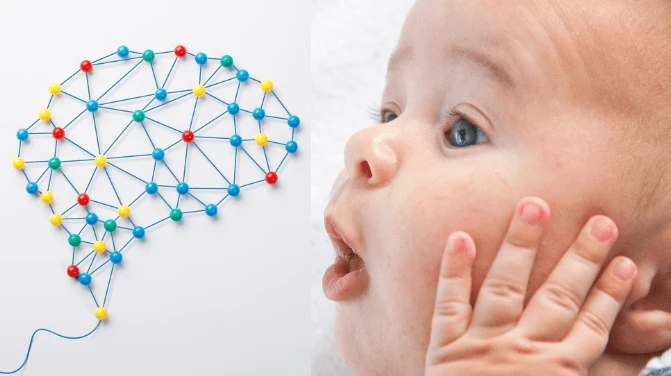
Brain waves and the subconscious play a critical role in human development. From birth to adulthood, the brain moves through different developmental phases, each defined by distinct brainwave patterns and a specific kind of receptivity. In this article, we'll look at these changes and how they shape the subconscious and our ability to learn and adapt, drawing on invaluable insights from the work of Dr Joe Dispenza and Dr Bruce Lipton, who offer unique perspectives on the link between brain activity and the subconscious.
Birth to age 2: Delta waves (0.5-4 Hz)
Main waves: Delta waves dominate during this period. They're linked to deep sleep and recovery.
Brain development: A newborn's brain is remarkably plastic, meaning it's highly receptive to new stimuli and information. This is the period of the brain's fastest growth.
Sensory stimulation: The main ways babies learn at this stage are through sensory stimulation - sight, hearing, taste, touch and smell.
Emotional bonding: A strong bond with the primary caregiver is critical to a child's emotional and social development.
In his book "Biology of Belief," Bruce Lipton stresses how important the early years are for shaping subconscious beliefs. As Lipton puts it, "a child's subconscious is like a sponge, absorbing everything from its surroundings and forming the foundation of their identity and beliefs" (MDPI).
Ages 2-6: Theta waves (4-8 Hz)
Main waves: Theta waves become dominant in this age group. They're linked to daydreaming, imagination and intuition.
Brain development: This is a period of intensive learning and the formation of core cognitive and social skills.
Play and imagination: Children use play as their main way of learning and developing. Their imagination is highly active, letting them build elaborate make-believe scenarios.
Imitation: Children often copy the behaviour of adults and peers, a key way of learning social roles and norms.
In his book "Becoming Supernatural," Joe Dispenza explains how theta waves let children connect with deeper levels of consciousness, where "anything is possible and creativity knows no limits." He stresses that "the theta state is key to developing imagination and intuition" (The Spruce Eats).
Ages 7-12: Alpha waves (8-12 Hz)
Main waves: Alpha waves begin appearing more often, especially during relaxation and light concentration.
Brain development: The brain keeps developing, with cognitive abilities becoming more refined and connections strengthening between different brain regions.
Learning and memory: Children this age are especially receptive to formal schooling and academic activities. They develop memory skills and critical thinking.
Social interaction: Social bonds grow stronger, and children start to better understand social dynamics and group interactions.
According to Lipton, alpha waves create a state of "calm awareness" that's ideal for learning and taking in new knowledge. "In this state, children can absorb information more effectively and store it in long-term memory" (MDPI).
Ages 13-18: Beta waves (12-30 Hz)
Main waves: Beta waves become dominant, especially during intense concentration and activity.
Brain development: The prefrontal cortex, responsible for planning, decision-making and self-control, undergoes significant development.
Critical thinking and problem-solving: Teenagers develop the ability to think abstractly and solve complex problems.
Identity and self-awareness: This is a period of forming personal identity and heightened self-awareness. Young people start exploring their values and beliefs.
Dispenza points out that beta waves are linked to "active awareness and attention to the outside world." As he puts it, "this is the time when young people begin to establish themselves as independent individuals capable of making their own decisions" (The Spruce Eats).
The development of brainwaves and the human subconscious moves through distinct stages from birth to age 18. Each stage is marked by specific brainwave patterns and a particular kind of receptivity that plays a critical role in a person's cognitive, emotional and social development. Understanding these processes can help parents and educators provide the right stimulation and support for optimal development. The work of Joe Dispenza and Bruce Lipton offers valuable insight into how brain activity and the subconscious interact, shaping the foundations of our consciousness and personality over the years.
See how you can support your baby's development right from their first year: https://otmamazamami.com/pomagalo-super-bebe