









"My Child Won't Share" - Is That Normal, and How Should We Respond?
3 min read От Мама За Мами
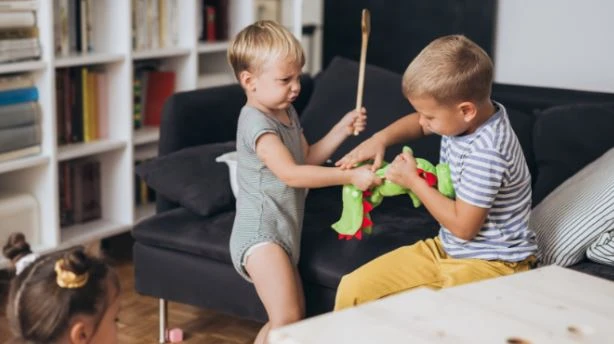
"Mum, that's mine! I'm not giving it! Only I get to play with this!" These are the kinds of lines that can worry any parent. We hear them at the playground, at home with a younger sibling, or when friends come round. In moments like these, questions start creeping in: is our child too selfish, are we raising them wrong, why do other children share when ours won't? The truth is that this kind of behaviour isn't just normal, it's fully expected at a certain stage of development.
Young children aren't born knowing how to share. It's not an innate reflex but a social skill that develops over time. Between the ages of two and four, children are only just starting to understand the difference between "mine" and "yours". To them, if something is handed to someone else, it's gone for good, they don't yet grasp the idea of lending something temporarily. This is also the age when they start building their own boundaries, and "mine" is how they stake out their territory. A strong sense of ownership, combined with a need for predictability, makes sharing even harder.
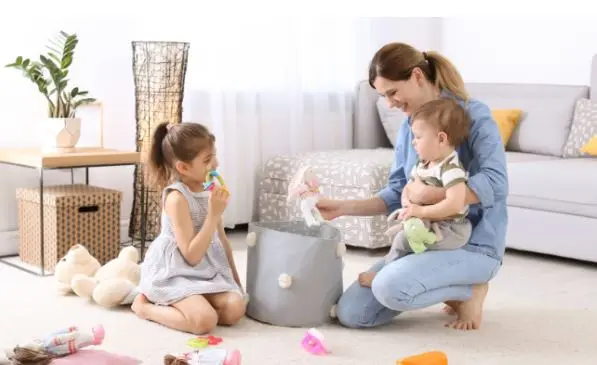
One trap we often fall into is comparison. We see another child hand over their toy with a smile and instantly feel that ours is "failing". But we miss everything that led up to that moment: the effort, the practice, the tears, the conversations. Temperament plays a role too. Some children are more introverted or cautious by nature and find it harder to let go of control. That doesn't mean they can't learn it, just that they'll need more time and understanding.
When a child refuses to share, instead of pushing them, we can take a step back and ask ourselves: "What's making them feel unsafe right now?" Support doesn't come from orders like "give them the ball now", but from acknowledging the emotion behind it. When we say, "I understand it's hard to give it up because you really love it", the child feels heard. That's what opens the door to trust.
Role play at home helps too. When the teddy bear asks the bunny for its little cart, and we act out different responses (saying no, agreeing, negotiating), the child gets to explore these situations safely, from a distance. It also helps for them to know that some things are entirely their own and aren't expected to be shared. That gives them the security of knowing they haven't lost all control.
Over time, especially after they turn four, we start to see a shift. Children understand that they can lend something for a while and get it back afterwards. They start to enjoy seeing someone else happy with their toy. Even so, they won't always want to share, and that's normal too. The most important thing is not to mistake reluctance to share for a bad character. It's simply part of the journey, and our patience, respect and example are the best lesson we can offer.
See how you can support your child's development and bring more harmony to your family by joining the community of all Super Parents, because being a confident parent is a set of skills, and shared experience is the most valuable thing of all: https://superroditeli.com/