The Play That Builds Them: Practical Age-by-Age Activities, Without the Extra Pressure
12 min read От Мама За Мами
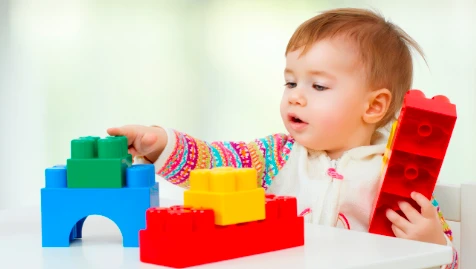
Play isn't "just a way to fill the time". It's how a child learns about the world, and how we connect with them, without turning ourselves into full-time entertainers. Because real life is noisy, tiring and runs on coffee drunk in three gulps, here's a list of activities that are easy to do at home, cheap and genuinely good for development, split into activities for babies (0-3) and preschoolers (3-6).
Here's something reassuring: play isn't "just messing about". It supports skills like self-control and focus.
And in child development there's one "mysterious" principle that's actually the most natural one of all: "serve and return". The child "serves" (a look, a sound, a gesture), and the adult "returns" (a response, a word, a smile). This little back-and-forth is tied to the way children learn about and make sense of the world.
And here's something very practical: young children need safe, play-based physical activity, and "sitting down" time is best spent on quality activities, such as reading, storytelling, singing, puzzles, not just screens.
The most reassuring thing for me is this: the early years are a foundation, not just for "skills", but for wellbeing and connection.
(age range: 0-3 years)
Before we start: at this age, "progress" often shows up in tiny moments - 10 extra seconds of focus, one new little sound, one "more!". Play at this stage should be gentle and short: 3-10 minutes is plenty.
What it's for: connection and "serve and return" in its purest form.
Develops: attention, language, social interaction.
How (steps): 1) get down to the child's level; 2) wait for them to "serve" (a look/sound/gesture); 3) "return" with a short response; 4) repeat 5-10 times.
If it's not working: stop "asking" and just describe what they're seeing or doing; cut back on other stimulation (TV/phone).
What to say: "I see you. You're showing me..." / "Oh, you heard that!"
Sign you're making progress: the child starts seeking out your gaze more often, or repeating a sound or gesture.
Tummy time as an adventure
What it's for: building physical strength, getting ready to crawl.
Develops: neck and back strength, coordination, pushing up on the arms.
How: 1) place the baby on their tummy on a firm, safe surface; 2) lie down facing them; 3) show them a high-contrast toy slowly; 4) stop before they get upset.
What you need: a high-contrast book or toy, a small blanket.
Time: 1-3 minutes, a few times a day; for babies who aren't yet mobile, the aim is often at least 30 minutes a day in total, spread out.
If it's not working: try it on your chest instead (more soothing); change location; keep it very short but frequent.
What to say: "Here I am. I'm right here."
Sign of progress: holding their head up for longer, or reaching for a toy.
What it's for: screen-free sensory exploration.
Develops: touch, concentration, curiosity.
How: 1) put 6-10 safe household objects in a basket; 2) let the child choose; 3) just name what they pick.
What you need: a wooden spoon, a silicone brush, a piece of fabric, a large lid (nothing with small parts!), a cardboard box.
If it's not working: cut the objects down to 3-4; remove the noisiest or brightest ones.
What to say: "This is smooth... this is noisy..."
Sign of progress: playing with one object for longer, instead of switching every second.
What it's for: the "magic" of cause and effect.
Develops: coordination, patience, early maths (more/less).
How: 1) give them two bowls; 2) add large, safe pieces (big building blocks, or pompoms for older toddlers); 3) demonstrate once; 4) let the child take the lead.
What you need: small bowls, tongs, large pieces.
If it's not working: use less "filling"; play on a tray or in the bath (easier to clean up).
What to say: "Whoops! Full... empty..."
Sign of progress: starting to coordinate both hands, or aiming more accurately.
What it's for: "where did it go?", a skill that builds a sense of security.
Develops: object permanence, attention, problem-solving.
How: 1) hide a toy under a cloth; 2) wait; 3) if the child struggles, lift the cloth slightly.
What you need: a cloth, a favourite toy.
If it's not working: start by only half-hiding it; turn it into a game of peekaboo.
What to say: "Where is it? I think it's here..."
Sign of progress: the child starts searching on their own and enjoys finding it.
What it's for: turning weaning into play, not a battle.
Develops: awareness of textures, independence, fine motor skills.
How: 1) offer safe finger food (banana/avocado/soft boiled potato); 2) give small portions; 3) let them get messy.
What you need: a bib, a mat, a baby spoon.
Time: 10-20 minutes (within an actual mealtime).
If it's not working: go back to one bite plus a pause; don't try to persuade; just offer.
What to say: "It's your choice. I'm right here."
Sign of progress: the child reaches for food on their own, or tries a new texture without a fuss.
What it's for: the first steps towards "how I feel".
Develops: emotional vocabulary, self-regulation.
How: 1) stand in front of a mirror together; 2) make a "happy face"; 3) then a "surprised" one; 4) then let the child take the lead.
If it's not working: try it with a doll instead; don't push it.
What to say: "This is 'angry'. This is 'calm'."
Sign of progress: the child starts pointing to or copying an expression, or uses a sound for an emotion.
What it's for: movement and confidence in their own body.
Develops: gross motor skills, balance, spatial awareness.
How: 1) make a "tunnel" using a blanket over chairs; 2) put a toy at the far end; 3) encourage them to crawl through.
What you need: chairs, a blanket, cushions.
If it's not working: start with a wider "tunnel"; go through it yourself first.
What to say: "I'm here. Come to me."
Sign of progress: going through more confidently, stopping less often.
What it's for: language and focus without pressure.
Develops: vocabulary, attention, "joint attention" (looking at the same thing together).
How: 1) choose a book with clear pictures; 2) point to one object; 3) say one word; 4) repeat, without "testing" them.
If it's not working: let the child turn the pages; you just comment on what's there.
What to say: "Cat. Meow." / "Car, vroom."
Sign of progress: pointing, turning pages, repeating a sound or word.
What it's for: self-control, turned into a game.
Develops: listening, impulse control, joy.
How: 1) put on some music; 2) dance together; 3) stop the music and say "stop"; 4) start again after 2 seconds.
What you need: music/a phone (for music only).
If it's not working: keep the "stop" very brief; praise the effort, not just success.
What to say: "You stopped! Well done, your body is listening."
Sign of progress: stopping more quickly, or waiting for you to say "go".
Games for preschoolers
(age range: 3-6 years)
This is where the "big magic" appears: imagination. At preschool age, the process of play matters in its own right - the child adapts, invents, tries things out.
What it's for: social skills and language.
Develops: dialogue, turn-taking, maths (counting), confidence.
How: 1) arrange "goods" (fruit/packaging); 2) set up a "till"; 3) take it in turns to play shopkeeper and customer; 4) add a "rule" (e.g. 3 items).
What you need: bags, empty packaging, coins or buttons.
If it's not working: start as the customer yourself; don't correct them; follow their lead.
What to say: "How much is this?", "Can you help me?"
Sign of progress: the child starts using "please" and "thank you", or forming longer sentences.
The "What happens next?" story
What it's for: thinking and language.
Develops: sequencing, prediction, speech.
How: 1) read one page; 2) stop; 3) ask "what do you think happens next?"; 4) accept every answer.
If it's not working: offer a choice, "A or B?", instead of an open question.
What to say: "Tell me your version."
Sign of progress: answering with more than one word; starting to use "because".
What it's for: planning and patience.
Develops: fine motor skills, executive function (planning and control).
How: 1) agree on a "plan" (a tower of 10 blocks); 2) build it together; 3) if it falls, "restart without drama".
What you need: building blocks or bricks.
If it's not working: lower the target; take turns, "my go/your go".
What to say: "Let's try again. It's not a big deal."
Sign of progress: less frustration and more attempts after a setback.
What it's for: movement and attention.
Develops: categorisation, concentration, language.
How: 1) say "find 3 green things"; 2) then "round things"; 3) then "soft things".
If it's not working: start with just one item; give an example.
What to say: "How did you know it was green?"
Sign of progress: finding things faster; starting to suggest categories themselves.
What it's for: independence and "helping out" without a battle.
Develops: coordination, following instructions, confidence.
How: 1) washing a piece of fruit; 2) stirring salad or porridge; 3) arranging it on a plate.
What you need: a bowl, a spoon, safe foods.
If it's not working: give them just one task (stirring only); praise the effort.
What to say: "You're my helper."
Sign of progress: wanting to join in again; following the steps in order.
Play dough for finger strength
What it's for: getting ready for writing and fine motor skills.
Develops: finger muscles, concentration.
How: 1) squash it; 2) roll balls; 3) flatten it; 4) make "snakes".
What you need: play dough, sticks, lids.
If it's not working: start with a softer material; keep it short.
What to say: "Show me your longest snake!"
Sign of progress: a better grip; holding attention for longer.
What it's for: emotional literacy.
Develops: empathy, naming feelings, self-regulation.
How: 1) choose a character; 2) ask "how are they feeling?"; 3) ask "what would help them?"
If it's not working: start with an example of your own.
What to say: "If you were their friend, what would you say?"
Sign of progress: the child starts naming feelings like "angry/sad/worried" instead of just exploding.
What it's for: social skills and self-control.
Develops: patience, following rules, "mine/yours".
How: 1) play a memory game or a dice game; 2) set clear rules; 3) keep rounds short.
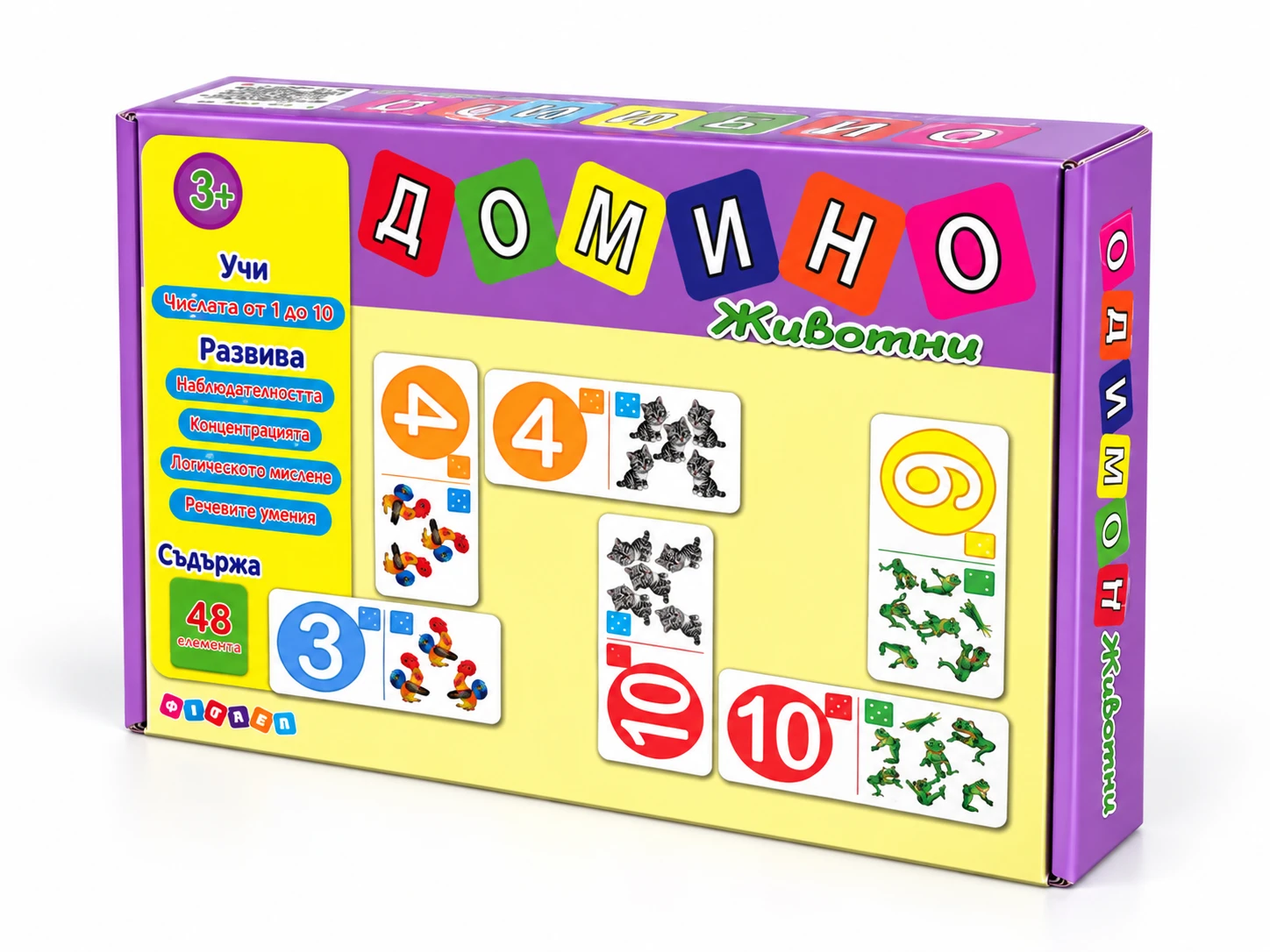
What you need: cards, dice or dominoes.
If it's not working: shrink the game to 5 minutes; "winning" means staying calm.
What to say: "It's your turn now. Then it's mine."
Sign of progress: interrupting less; taking losing more easily.
What it's for: body awareness, confidence, movement.
Develops: balance, coordination, strength.
How: 1) tape on the floor as a "bridge"; 2) walk along it; 3) carry an object across.
What you need: tape or string, a small cushion.
If it's not working: make the "bridge" wider; simplify the task.
What to say: "Slowly, like a cat..."
Sign of progress: stepping off the line less often; growing confidence.
What it's for: curiosity and early science.
Develops: observation, forming hypotheses, language.
How: 1) fill a basin with water; 2) gather 5 objects; 3) ask "before we drop it in, what do you think will happen?"
What you need: a basin, a spoon, a small stone, a lid, a sponge.
If it's not working: use fewer objects; try ice too (with supervision).
What to say: "You predicted it! How did you know?"
Sign of progress: starting to "predict" and explain their thinking.
How to play without burning out
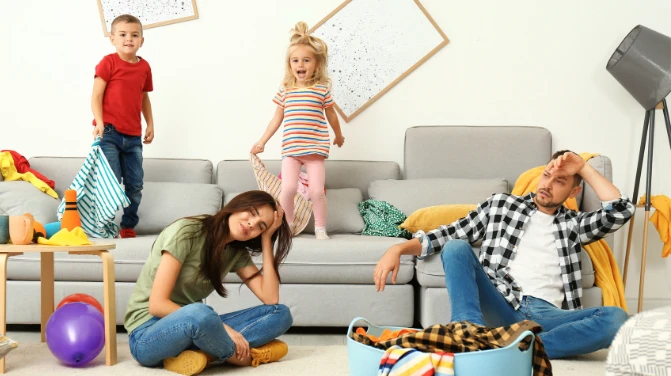
Sometimes the hardest part of playing isn't the child. The hardest part is our own tiredness. And what you need here isn't another "must do". What you need is permission for it to be enough.
Here's how to look after yourself as a parent:
Keep play sessions short and regular, rather than rare and elaborate. 10 minutes a day is worth more than 1 hour once a week.
Go in with "one job": to connect. Not to teach.
When you feel yourself boiling over: pause, breathe out, drop your shoulders. Sometimes that's all the progress you need for the day.
Use the "serve and return" principle for yourself too: the child gets activated → I respond with presence, not control.
And if you need one phrase to hold the frame:
"Right now we're together for 10 minutes. Then mummy needs a rest."
A boundary isn't coldness. A boundary is care.
Sample four-week plan and checklist
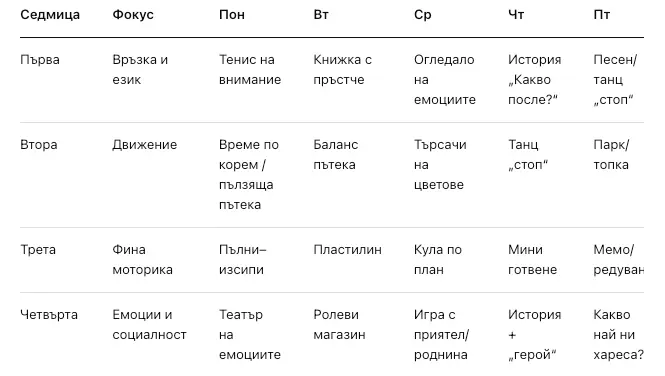
The idea is simple: 4 weeks, 10-20 minutes a day, no heroics required. The days are just suggestions, shift them to suit your own routine.
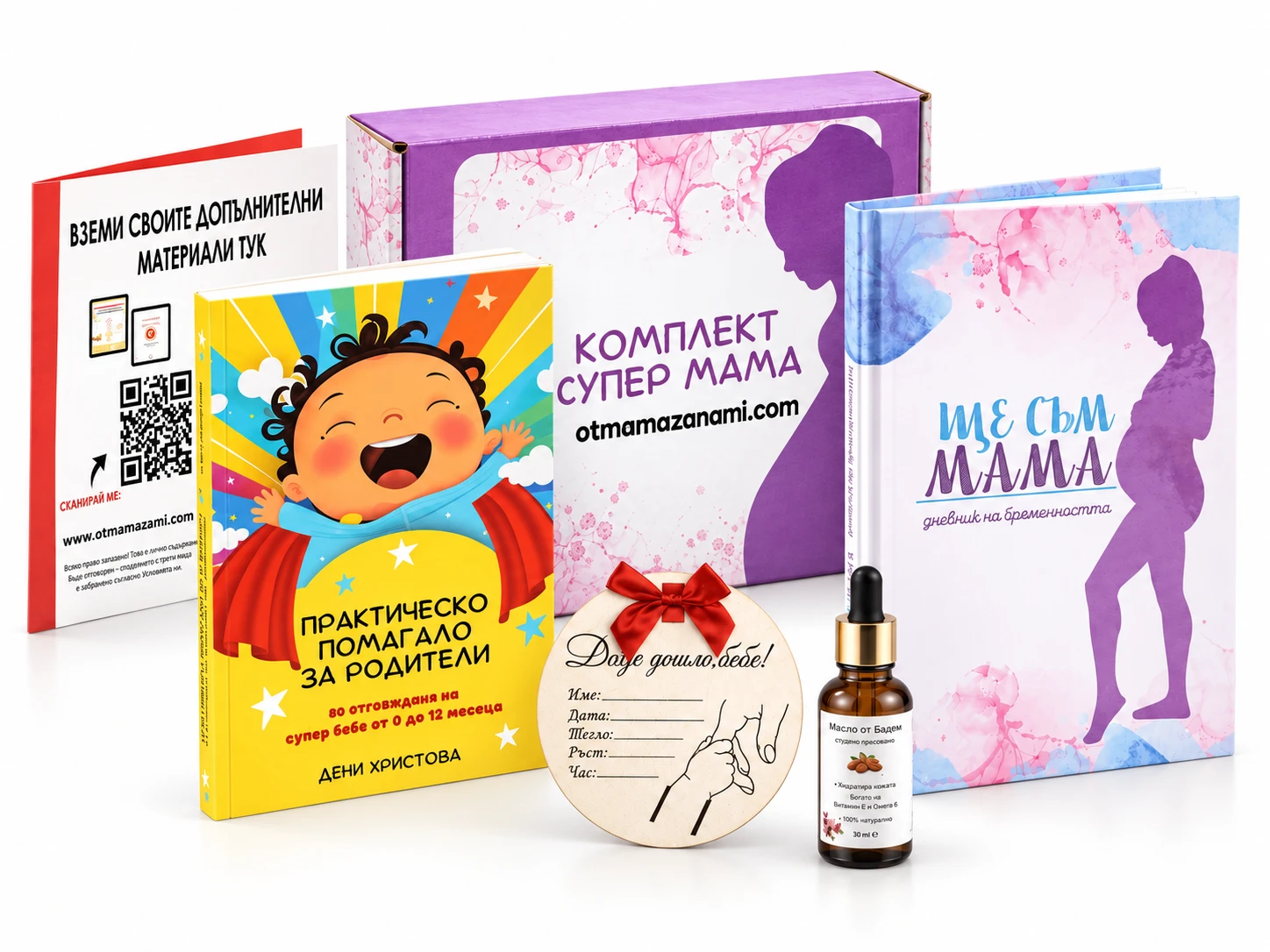
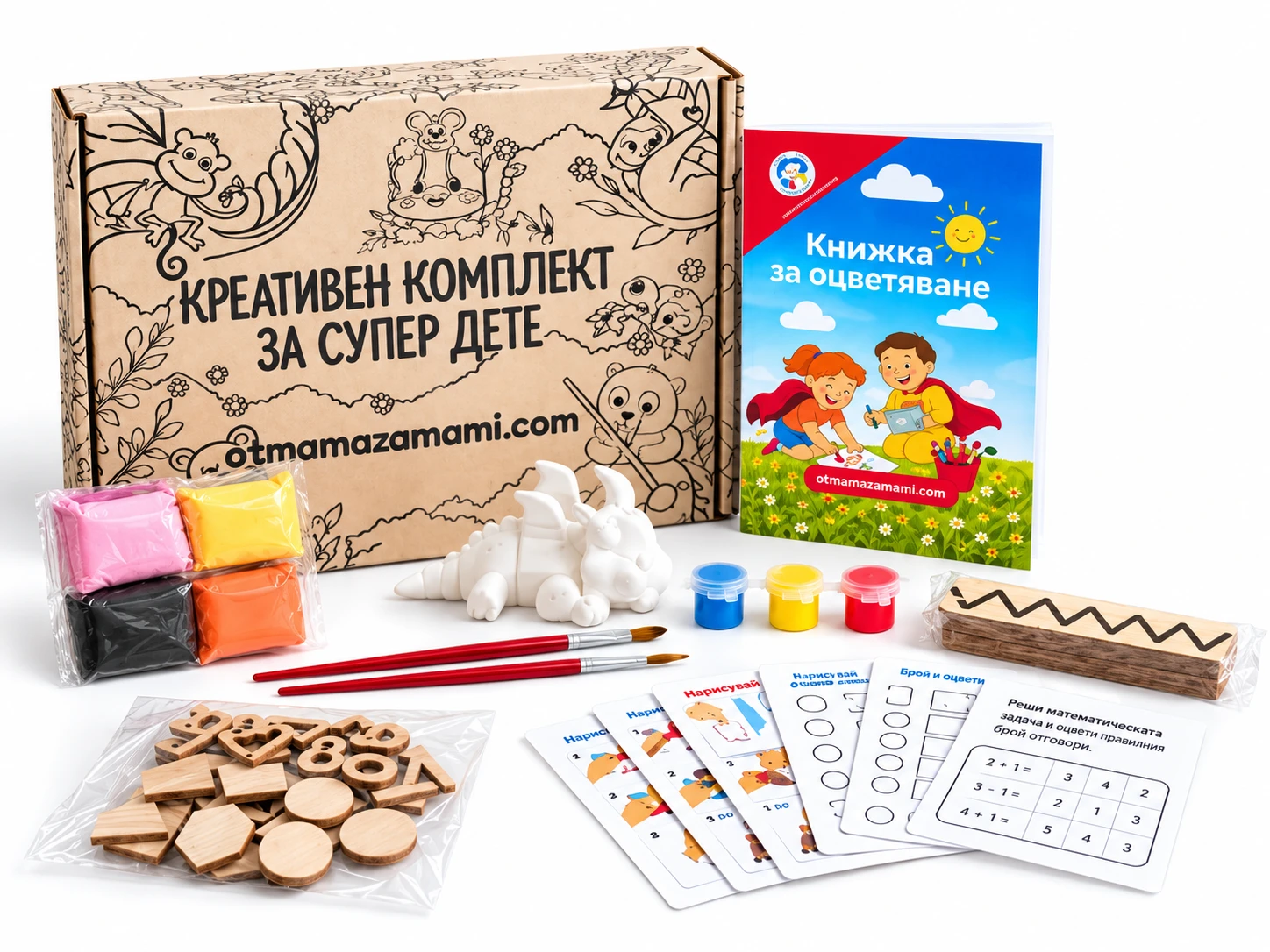
See how you can support your child's development: https://otmamazamami.com/komplekti/