







I CAN'T MOVE AN INCH - WHY WON'T MY BABY SETTLE ON THEIR OWN?
4 min read От Мама За Мами

ON A BABY'S "NO!" AND THE ROAD TO INDEPENDENCE
"I can't even get to the bathroom..."
"I put her down for a minute and she starts crying..."
"We carry him around all day, otherwise he won't stop fussing."
If any of this sounds familiar, know that you're not alone. Many parents (especially with their first child) go through this period of constant need for closeness, which often sparks doubts:
"Is this normal?"
"Am I spoiling him?"
"Will he get used to it?"
The truth is that the answer doesn't lie in habits or spoiling, but in the very nature of a newborn baby, in their need to be close to you, to sense you, to stay constantly connected. Not because something's wrong, but precisely because everything is going exactly as it should.
What's happening with your baby in the first few months?
During the first 3 months, your baby is still getting used to the world outside. Everything is new to them: the light, the sounds, the empty space around them. They don't yet understand that they're separate from you. They don't yet see the world as a safe place where they can exist on their own.
Babies have no sense of time. They have no idea that "Mummy's just popping out and will be back soon." They experience separation as a lack of safety, a lack of protection, a lack of life itself.
They're tiny, and they don't yet know how to soothe themselves. That means that when they cry and you're not there, they're not being difficult, they're sending a signal: "I need Mummy to survive."
So what do their instincts tell them?
Babies have an incredibly strong instinct for closeness. They seek out Mummy's touch, voice and scent because these are the most familiar things in the world to them. When they're in your arms, they feel safe. They settle. They relax.
Yes, your baby feels best in your arms, close to your heart. And the more closeness you give them early on, the more secure and independent they'll grow up to be.
What does this behaviour NOT mean?
It doesn't mean you're "spoiling" them.
It doesn't mean they'll be "glued to you" forever.
It doesn't mean you're doing something wrong.
It means you're meeting a natural biological need that will, in time, give way to independence. But only if the child has felt sure that when they need you, you're there.
So what can you do?
Use a sling or an ergonomic baby carrier so you have your hands free while still keeping your baby close to you.
Talk to your baby as you move around the room, so they can hear your voice and feel calmer.
Give yourself permission to sit down, snuggle up with them and do "nothing else", sometimes that's the most important thing of all.
Don't compare yourself to others, every baby is different. Some have a stronger need for closeness, others less so. And all of it is normal.
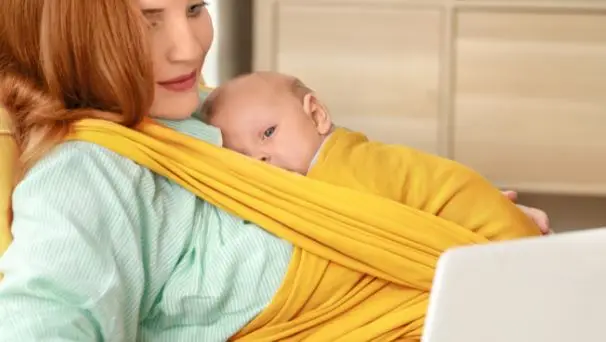
And what does your baby gain from this closeness?
Far more than it might seem at first glance.
You're not just carrying them. You're building a foundation of trust.
When you respond to their need for you, your baby learns:
"The world is safe."
"I matter."
"I can trust."
That sense of security will be their inner compass for years to come.
And little by little, you'll start to see them venture further away, more boldly.
But for now, they just want to be close to you.
If you're feeling exhausted, that's normal too. A baby's constant need for you is beautiful, but it's hard work as well.
Ask for help, rest when you can, and talk to your partner or loved ones.
Looking after yourself is part of looking after your baby.
You are their world.
And no, you're not spoiling them.
You love them.
And that's enough.
Discover how you can support your child's development and bring more harmony to your family by joining the SuperParents community, because being a confident parent is a set of skills, and shared experience is the most valuable thing of all: https://superroditeli.com/